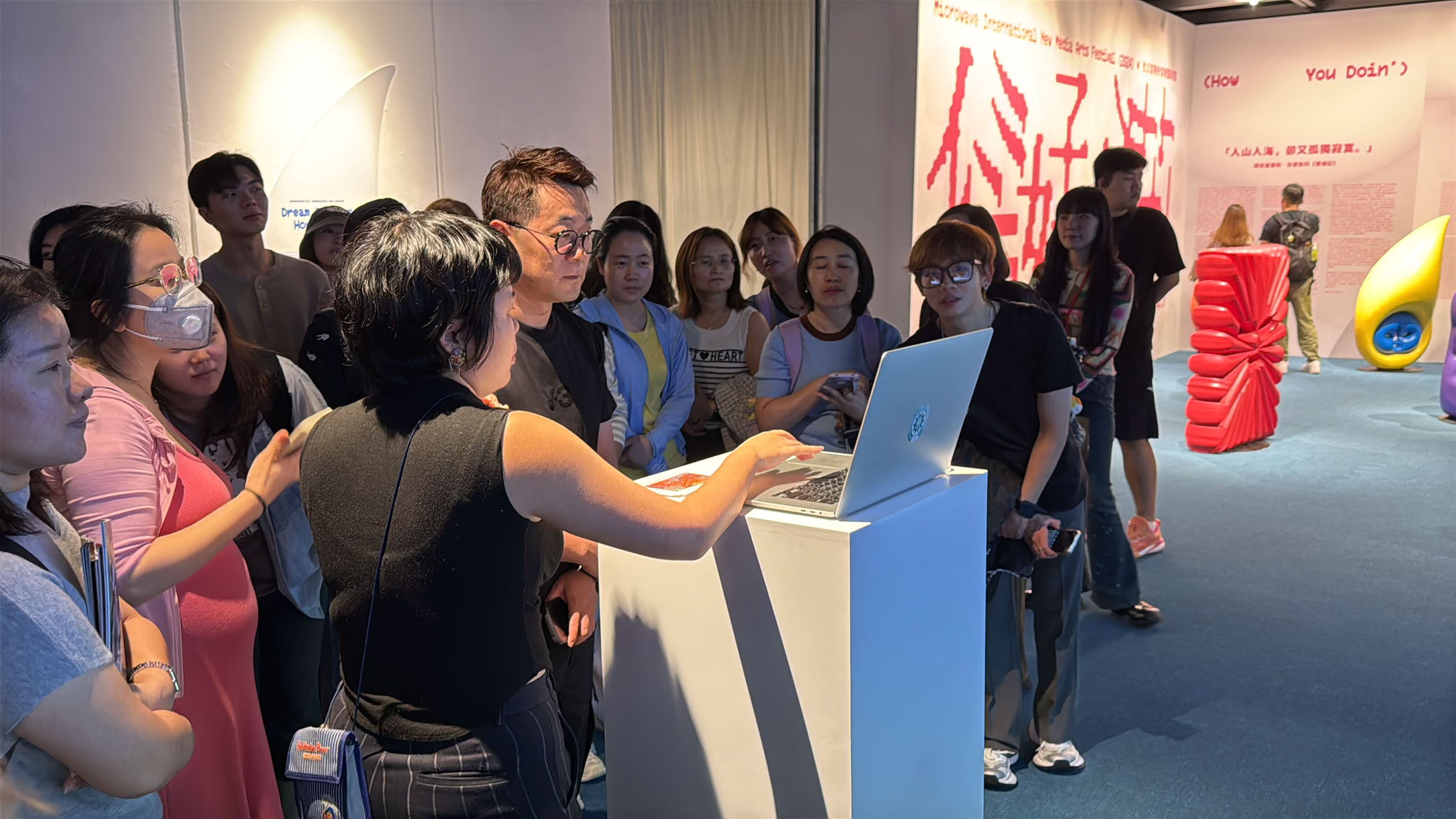
Festival Exhibition
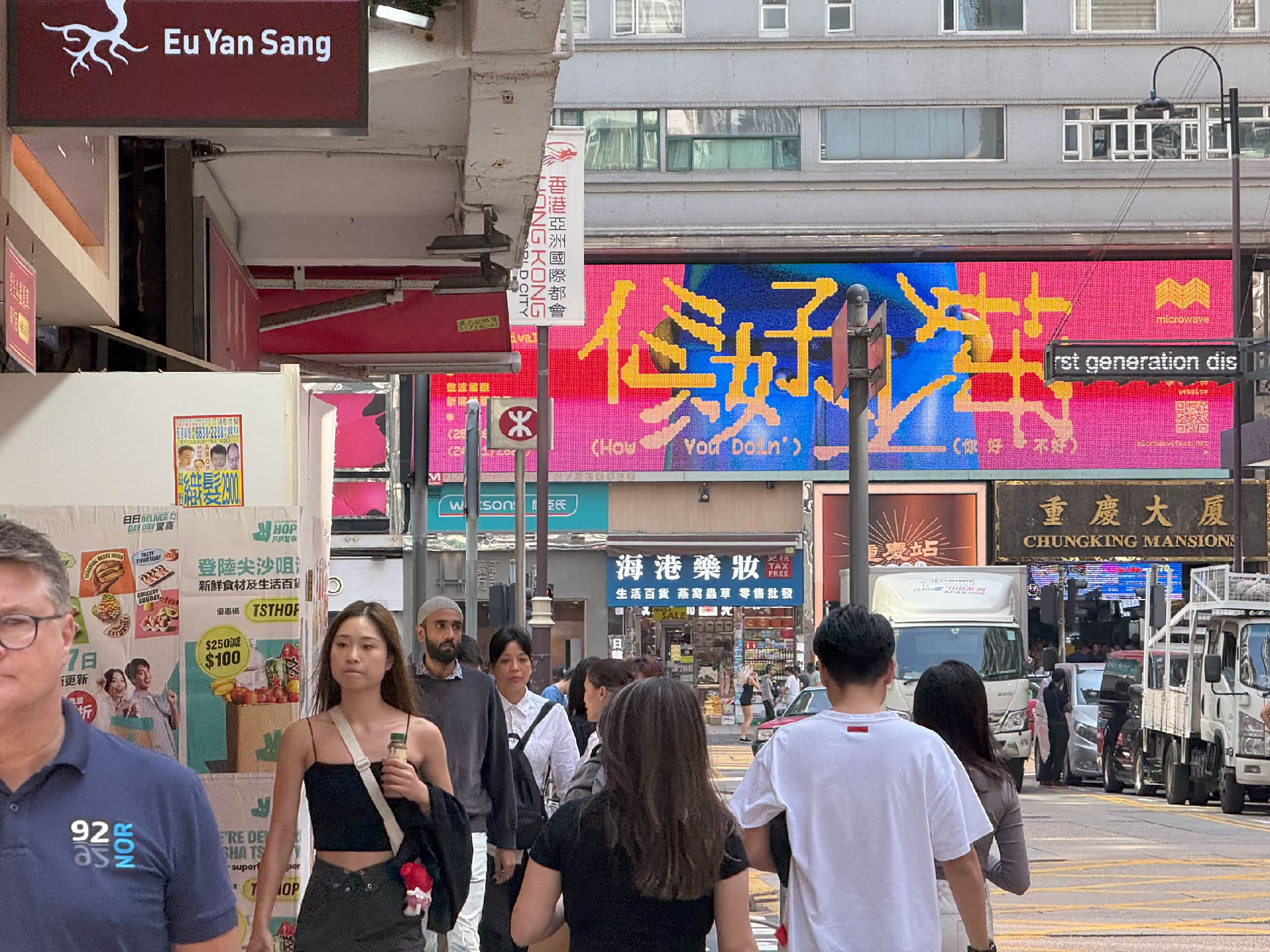
Microwave International New Media Arts Festival is one of Asia's leading festivals dedicated to new media art, bringing together international artists working across artificial intelligence, immersive technologies, digital culture, and experimental media.Dream Blender Hong Kong was presented as part of the festival's main exhibition How You Doin?, exploring the relationship between artificial intelligence, human emotion, and contemporary digital life.
About
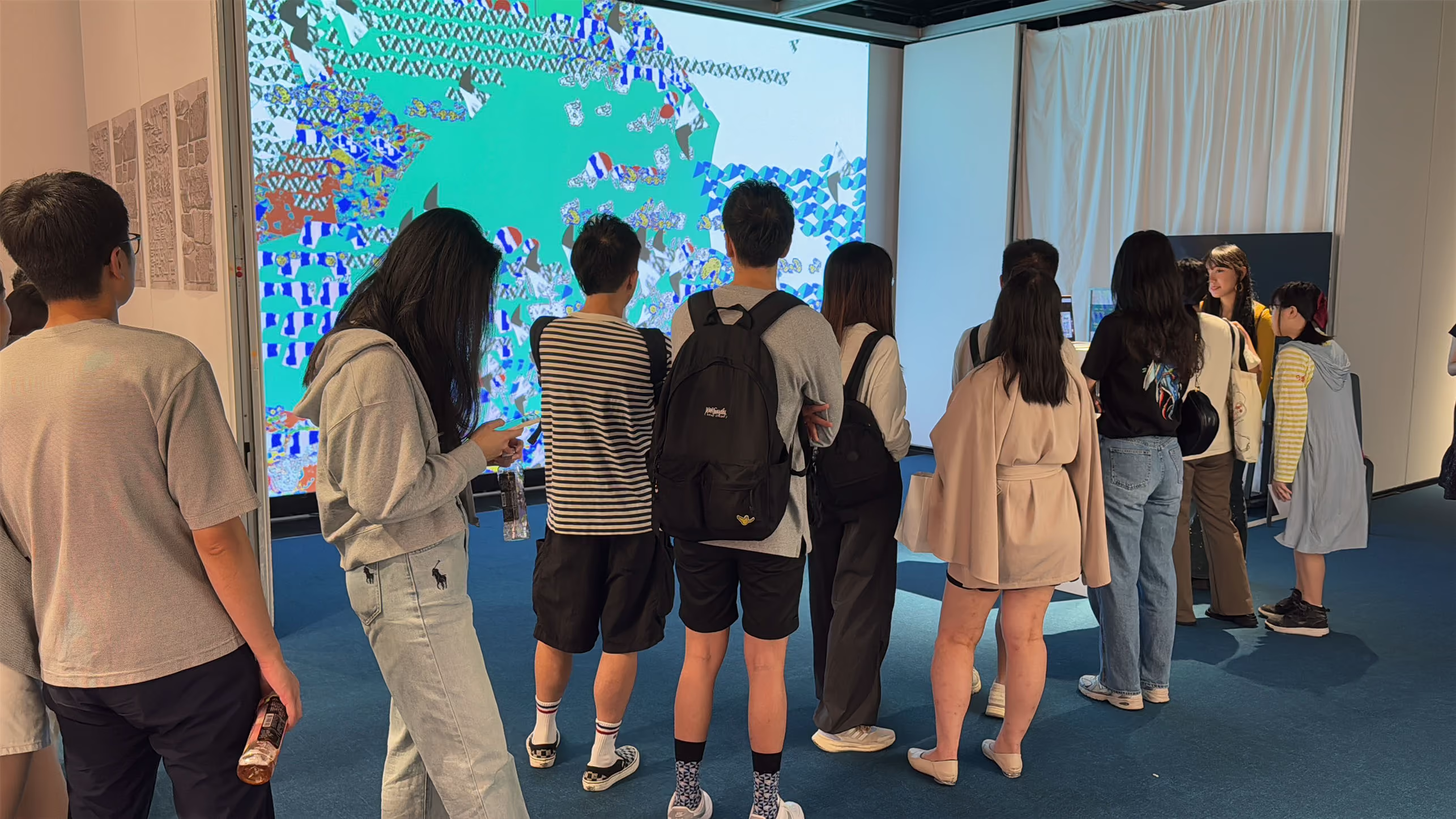
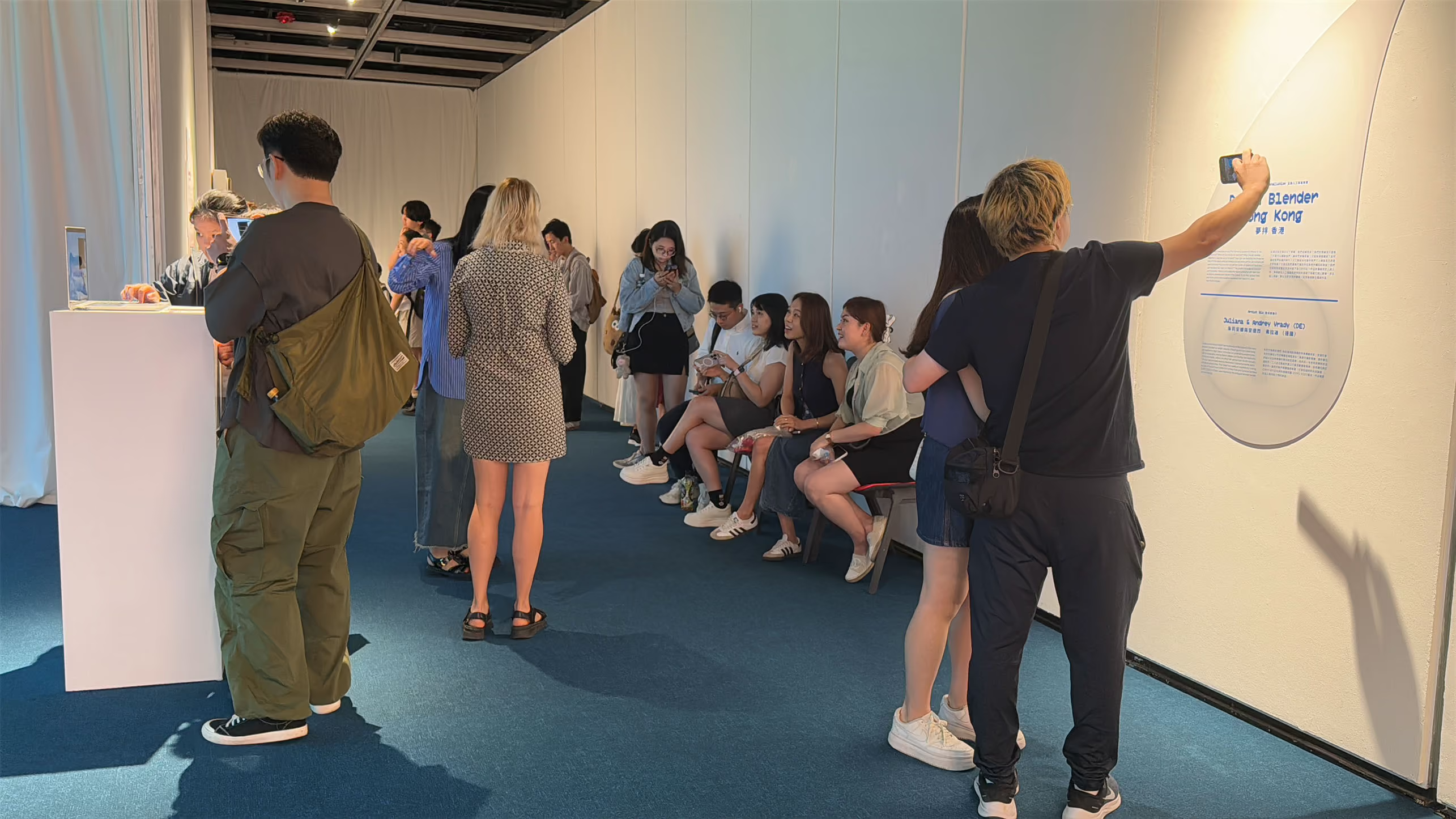
Dream Blender Hong Kong invites visitors to encounter artificial intelligence from an unexpected perspective.Rather than asking whether AI is good or bad, the installation reverses the familiar question: How does AI perceive us?
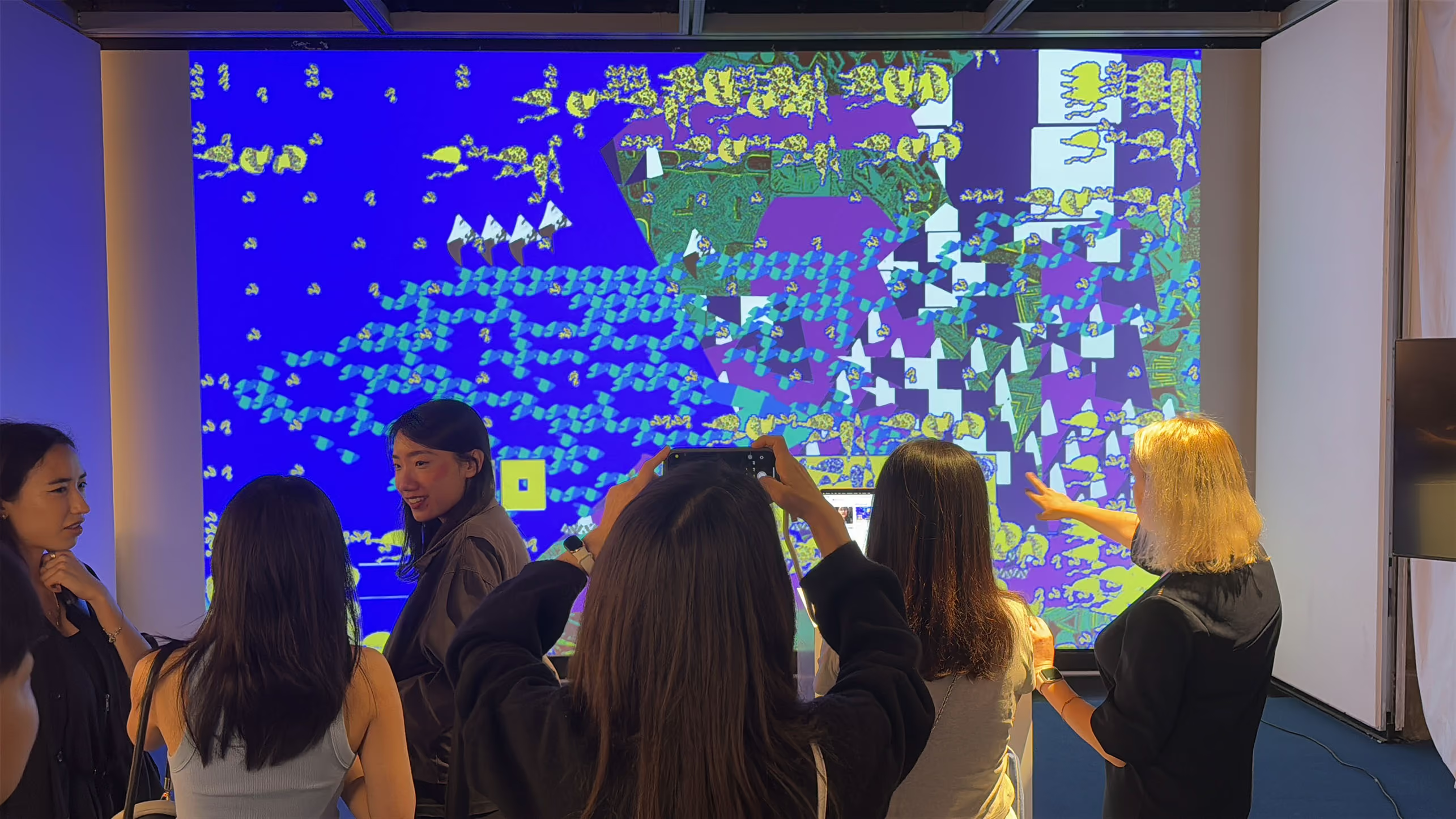
Using real-time facial expression analysis, the system interprets visitors' emotional states and transforms them into continuously evolving abstract visual compositions. Every participant creates a unique emotional portrait generated through the dialogue between human feelings and machine perception.Instead of presenting artificial intelligence as a replacement for human creativity, the installation proposes AI as a creative collaborator—one capable of revealing emotional patterns that often remain invisible even to ourselves.Presented within the context of How You Doin?, the work became part of a broader international conversation about technology, empathy, identity, and the future relationship between humans and intelligent systems.
Created by
Juliana & Andrey Vrady
coded with ♥ by Andy Junginger
Selected Press
"Dream Blender Hong Kong encourages self-reflection: where do we come from? Do our emotions have appearances? Can imagination about the future be conveyed to others using artificial intelligence?"
Published by Culture+, Hong Kong
"Meanwhile, Juliana and Andrey Vrady’s “Dream Blender Hong Kong” makes use of facial recognition sensors to visualise human emotions. “We talk so much about how AI is good, or it’s bad. We want to change the perspective to ask ‘How does AI perceive us?” says Juliana. As viewers watch a short video, “Dream Blender Hong Kong” detects and visualises their emotions in different colours. Yellow is associated with joy, blue with sadness, according to the art duo. Importantly it’s always a mix of colours, “as different emotions cycle through us simultaneously,” says Juliana. She is adamant that AI is unequivocally a tool and nothing more. “I’m using AI like a painter would use a paintbrush,” she says. Behind “Dream Blender Hong Kong” is the idea that humans have feelings and they “won’t easily be replaced by AI.” While that may be true, AI algorithms can also be particularly adept at recognising the nuances of our facial expressions. When they first developed their AI system, Andrey became the first test subject. It turned out the AI might have understood Andrey better than Juliana did. “I showed him a funny video, and he smiled, but the AI detected disgust and contempt,” she says. “I asked Andrey how he actually felt. And he told me, “I wasn’t happy. It was a stupid video.” That anecdote succinctly captures how complex human emotions are-but sometimes how undecipherable it can be to other human beings. At the end of the day, we are all bound by the shared experience of loneliness, as the exhibition’s cultural statement, quoting Charles Dickens, notes: “A multitude of people, yet a solitude!” But it also begs the questions: as AI becomes more advanced, can we — and should we — rely on AI to take a closer look at ourselves and others?" Published by Zolima Citymag, Hong Kong

juliana & andrey vrady